What a Log Cabin Inspection in Gatlinburg Should Check Before You Buy
Published: July 17, 2026
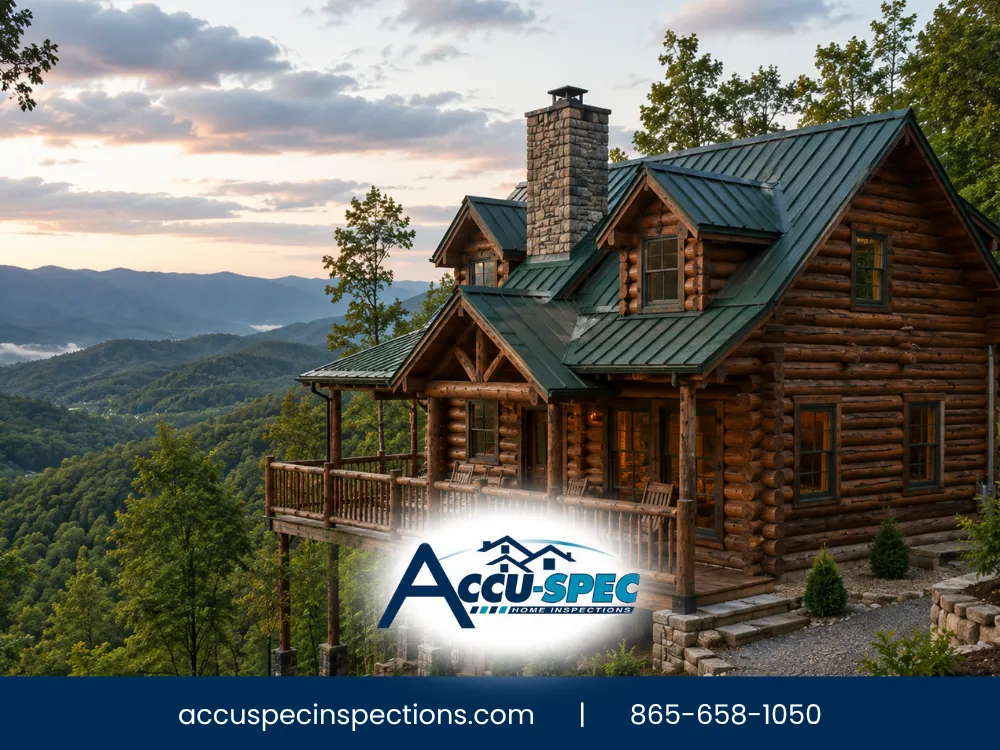
Buying a log cabin in Gatlinburg can provide mountain views, rustic character, and the potential for a vacation home or short-term rental near the Great Smoky Mountains. However, log construction also presents maintenance and inspection concerns that may not be present in a conventional home.
Logs serve as exterior surfaces and important structural components. Moisture, sunlight, insects, settlement, and deferred maintenance can therefore affect more than the cabin’s appearance.
A professional log cabin inspection in Gatlinburg, TN, evaluates accessible logs, chinking, sealants, windows, doors, drainage, decks, foundations, crawl spaces, and major home systems. It helps buyers understand the cabin’s visible condition and identify areas that may require maintenance, repair, or further evaluation before closing.
What Does a Gatlinburg Log Cabin Inspection Cover?
A log cabin inspection typically covers the property’s accessible structure, exterior, roof, foundation, electrical system, plumbing, HVAC equipment, attic, crawl space, interior, decks, and installed components.
It also gives additional attention to conditions associated with log construction, including:
Log checking and cracking
Wood rot and deterioration
Failed chinking or sealants
Log settling and building movement
Moisture around windows and doors
Exterior stain and finish conditions
Visible wood-destroying insect activity
Roof runoff and mountain drainage
Elevated decks, porches, and stairs
The inspection is a visual evaluation of safely accessible areas. When significant deterioration or movement is observed, further evaluation by an appropriate specialist may be recommended.
Natural Log Checking Versus Concerning Cracks
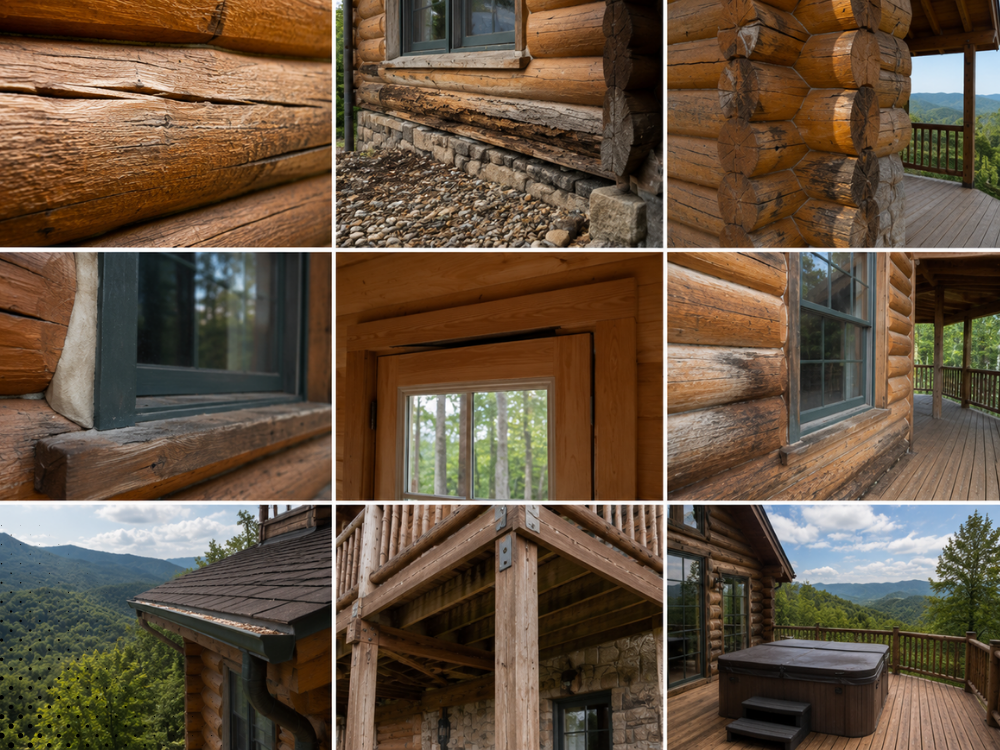
Logs naturally expand, contract, and dry over time. This process can create lengthwise cracks known as checks. Some checking is expected and does not automatically indicate a structural defect.
However, the location, size, orientation, and depth of a crack can affect how it should be evaluated. Upward-facing checks may collect rainwater, while deep openings can allow moisture or insects to enter the wood. Cracks near corners, doors, windows, and structural connections may also require closer attention.
During the inspection, accessible logs are evaluated for visible conditions that may indicate water entry, deterioration, excessive movement, or the need for specialized assessment.
Wood Rot and Log Deterioration
Wood deterioration is an important concern when inspecting a Gatlinburg log cabin. It commonly develops where water remains in contact with the logs or damp wood cannot dry properly.
Areas that deserve careful attention include:
Lower logs near the foundation
Areas below windows and doors
Corners and exposed log ends
Deck and porch connections
Sections exposed to roof runoff
Logs located near soil or vegetation
Areas around utility penetrations
Shaded exterior walls that dry slowly
Discoloration, soft wood, fungal growth, surface deterioration, or previous patching may indicate a moisture-related condition. Because deterioration can extend farther into a log than is visible from the surface, additional evaluation may be recommended.
Chinking, Caulking, and Sealant Conditions
Chinking and sealants close spaces between logs and around exterior openings. When these materials crack, separate, or deteriorate, water and outside air may enter the building envelope.
An inspector looks for visible gaps, failed adhesion, missing sealant, and incomplete repairs around doors, windows, corners, utility penetrations, and log joints.
Failed sealants can contribute to drafts, energy loss, moisture intrusion, and insect access. Resealing is a normal part of log-cabin maintenance, but widespread deterioration may indicate deferred maintenance.
Log Settling and Building Movement
Some settlement is expected as a log cabin ages and its wood components dry. Properly constructed log homes may include systems that allow controlled movement around posts, doors, windows, stairs, and other components.
Potential signs of excessive or poorly managed movement include:
Doors or windows that do not operate properly
Gaps above or below openings
Uneven floors
Stair or railing separation
Compressed or distorted trim
Displaced wall components
Improperly adjusted support posts
Plumbing or wiring affected by movement
Not every sticking door or uneven surface indicates a major structural concern. The inspector considers the condition alongside other visible evidence before recommending repair or further assessment.
Moisture Around Windows and Doors
Windows and doors interrupt the log-wall system and can become common entry points for water. Failed flashing, deteriorated sealant, inadequate roof overhangs, and improper installation may allow moisture to reach the surrounding logs.
Water stains, peeling finishes, soft wood, gaps, and damaged trim may indicate a current or previous leak. Accessible interior surfaces should also be checked for staining and moisture-related deterioration.
Gatlinburg’s rainfall and humid mountain environment make water management especially important for log cabins.
Roof Runoff and Drainage on Mountain Properties
Many log-wall concerns begin with exterior water management. Roofing, gutters, downspouts, grading, decks, and surrounding vegetation all affect how much moisture reaches the cabin.
Clogged gutters, short downspouts, negative grading, and roof runoff directed toward exterior walls may contribute to deterioration. Dense vegetation can restrict airflow and keep wood surfaces damp.
Drainage deserves careful attention on Gatlinburg’s steep and sloped properties. Water moving downhill toward a cabin may affect the foundation, crawl space, lower logs, and structural supports.
Decks, Porches, and Log Connections
Mountain cabins commonly have elevated decks, porches, stairs, and balconies. These components are exposed to changing weather and may connect directly to the log structure.
The inspection should address accessible posts, beams, joists, ledger connections, railings, stairs, deck boards, and visible fasteners. Areas where decks connect to exterior walls should be checked for water entry and wood deterioration.
If a deck supports a hot tub, additional evaluation may be appropriate to determine whether the structure was designed for the added load.
Frequently Asked Questions
Are cracks in cabin logs always serious?
No. Some lengthwise checking occurs naturally as logs dry. However, deep or upward-facing cracks may collect water or permit insect access. Their location and surrounding conditions determine whether further evaluation is appropriate.
Can an inspector identify wood rot inside a log?
An inspector can identify visible indications of deterioration in accessible areas. Because some decay may extend inside a log, further evaluation may be recommended when significant deterioration is suspected.
Why is drainage important for Gatlinburg cabins?
Many Gatlinburg cabins are constructed on sloped sites. Poor drainage can direct water toward the foundation, crawl space, structural supports, and lower logs, increasing the potential for moisture-related deterioration.
Experienced Cabin Inspector Serving Gatlinburg
Accu-Spec Inspection Services is led by Tom Maides, an experienced inspector serving Gatlinburg, Sevier County, and surrounding East Tennessee communities. His professional credentials and experience include:
ASHI Member Since 1995
ICC Credentialed Inspector
More than 30 years of inspection experience
Tom applies this experience when evaluating log construction, moisture exposure, settling, elevated decks, crawl spaces, drainage, and other conditions associated with cabins and mountain properties.
Schedule a Log Cabin Inspection in Gatlinburg
Before purchasing a log cabin, buyers should request available maintenance records for staining, sealing, pest treatment, roof repairs, drainage improvements, deck work, and previous log restoration.
Learn more about our Gatlinburg home and cabin inspection services.
To schedule a log cabin inspection withTom Maides, ASHI Member Since 1995 and ICC Credentialed Inspector, call or text (865) 658-1050 or book your inspection online