Cabin Inspection Gatlinburg TN: What’s Different?
Published: July 1, 2026
A cabin inspection in Gatlinburg, TN, is different from a standard home inspection because mountain cabins often include steep terrain, elevated foundations, log construction, moisture-sensitive wood materials, private wells, septic systems, large decks, hot tubs, and short-term rental wear. These features require a more specialized inspection approach than a typical suburban home.
Buying a vacation rental, log cabin, or mountain home in the Smoky Mountains is not the same as buying a traditional residential property. Many Gatlinburg cabins are built on slopes, surrounded by wooded areas, exposed to regional humidity, and designed for frequent guest use. Because of these conditions, the inspection must look beyond standard residential components and account for the way mountain properties are built, used, and maintained.
For buyers, sellers, and short-term rental investors, a specialized Gatlinburg cabin inspection can provide a clearer understanding of the property’s visible condition before closing, listing, or planning future maintenance.
Accu-Spec provides cabin and mountain home inspection services for buyers and property owners throughout Gatlinburg and the surrounding Smoky Mountains.
Why Gatlinburg Cabins Need a Specialized Inspection Approach
Standard home inspections typically focus on residential systems such as the roof, foundation, plumbing, electrical, HVAC, attic, crawlspace, interior, and exterior. While these areas are still important in a cabin inspection, Gatlinburg properties often require additional attention because of local construction styles, terrain, moisture exposure, and rental activity.
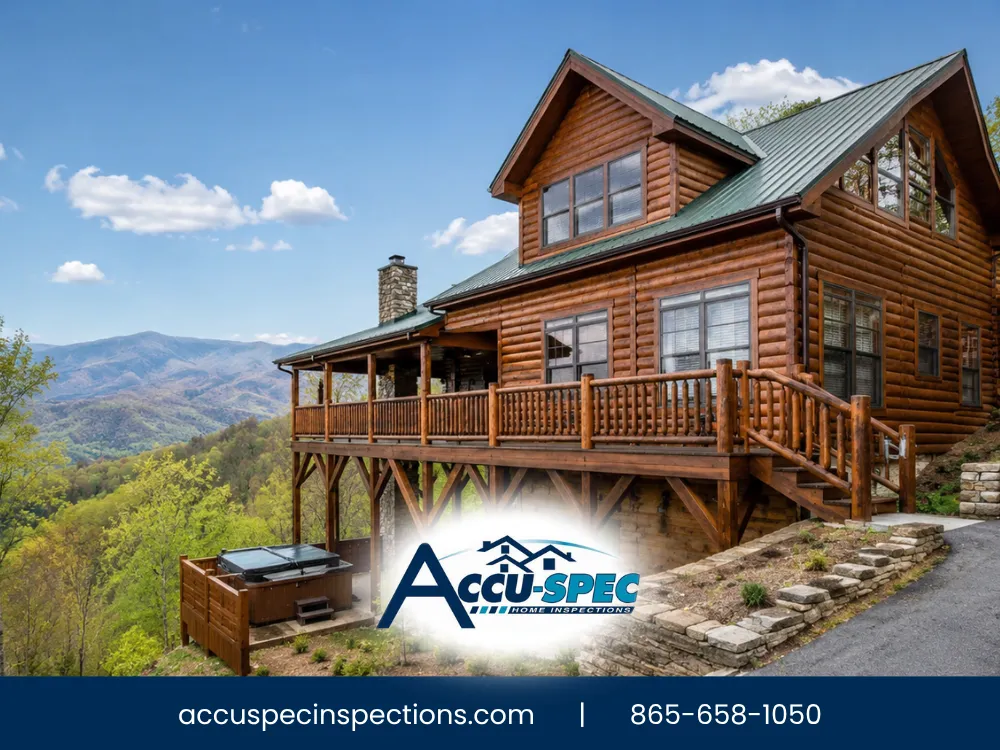
A cabin in the Smoky Mountains may include elevated decks, log walls, steep driveways, retaining walls, private water systems, septic components, hot tubs, and multiple guest-use spaces. These features can create inspection concerns that are less common in standard neighborhood homes.
1. Steep Terrain and Structural Support
Many traditional homes are built on relatively flat lots with a slab foundation, crawlspace, or basement. Gatlinburg cabins are often built into mountain slopes where drainage, erosion, soil movement, and structural support systems matter more.
During a cabin inspection, the inspector may pay close attention to visible foundation piers, support posts, retaining walls, slope drainage, erosion patterns, crawlspace access, and signs of structural movement. Mountain terrain can place unique stress on a property, especially when the home is elevated or partially built into a hillside.
Large multi-level decks are also common in Smoky Mountain cabins. These decks are often major selling features, but they also require careful inspection. Deck posts, beams, joists, stairways, railings, fasteners, and ledger connections should be reviewed where visible and accessible. This is especially important for cabins used as short-term rentals, where outdoor spaces may experience frequent use by larger groups.
2. Log Construction and Moisture Exposure
Many standard homes use vinyl siding, brick, stucco, or fiber cement over framed walls. Log cabins are different because the wood exterior is often part of the structure itself. Logs naturally expand, contract, settle, and respond to moisture over time.
A log cabin inspection should include a close visual review of log courses, chinking, sealant, log ends, trim areas, roof overhangs, and lower sections of the exterior walls. These areas are important because water intrusion, splashback, and poor drainage can contribute to wood deterioration.
Gatlinburg’s humid mountain environment can also make wood-destroying insects and moisture-related deterioration more important to evaluate. Termites, carpenter bees, decay, and damaged lower logs may be more likely in wooded or shaded areas where moisture remains close to the structure.
Log settling is another factor that makes cabin inspections different. Movement in a log structure can affect doors, windows, wall openings, and trim. A specialized inspection helps identify visible signs of movement, moisture entry, or wood deterioration that may need further evaluation.
3. Septic Systems, Wells, and Mountain Utilities
Many Gatlinburg cabins are located outside standard municipal water and sewer service areas. Unlike many suburban homes, mountain cabins may rely on private wells, septic systems, pump systems, pressure tanks, water filtration equipment, or holding tanks.
A standard home inspection does not usually include a full septic evaluation or water quality testing. For mountain cabins, these additional services are often important because the property may depend entirely on independent utility systems.
A septic inspection may help evaluate visible and accessible components of the system and determine whether further servicing or specialist review is needed. Mountain septic systems may also be affected by slope conditions, rocky soil, drainfield placement, and pump-assisted designs.
Private well water testing may also be recommended for cabins that do not use municipal water. Testing can help screen for bacteria, nitrates, and other water quality concerns. The inspection may also include visible components such as the pressure tank, pump equipment, filtration system, and related plumbing where accessible.
4. Short-Term Rental Wear and Guest-Use Features
Many Gatlinburg cabins are used as vacation rentals or short-term rental properties. This creates a different inspection profile than a standard owner-occupied home.
Short-term rental cabins may experience frequent guest turnover, repeated HVAC use, increased plumbing demand, heavy deck traffic, and added wear on appliances, fixtures, doors, locks, and safety features. These homes may also include amenities that are not common in standard houses.
Common guest-use features may include hot tubs, theater rooms, game rooms, bunk rooms, indoor pools, multiple HVAC systems, large water heaters, smart locks, and expanded electrical panels. A cabin inspection should evaluate these visible systems and related safety components where accessible.
For rental properties, inspectors may also pay close attention to stairways, railings, smoke alarms, carbon monoxide alarms, exterior walking surfaces, deck access, and emergency egress conditions. These areas help buyers better understand the condition of a property that frequent guests may use.
5. Drainage, Rooflines, and Exterior Conditions
Gatlinburg cabins often have complex rooflines, steep driveways, wooded surroundings, and drainage paths that are shaped by the mountain terrain. These conditions can affect how water moves around the home.
A cabin inspection may include a close review of gutters, downspouts, grading, splashback areas, roof valleys, flashing, decks, retaining walls, and crawlspace moisture conditions. Poor drainage can contribute to moisture intrusion, wood deterioration, erosion, and foundation concerns.
Because trees surround many cabins, inspectors may also look for roof debris, clogged gutters, moss or organic growth, and areas where tree coverage limits sunlight and keeps building materials damp longer.
Standard Home Inspection vs. Gatlinburg Cabin Inspection
A Gatlinburg cabin inspection is more specialized than a standard home inspection because mountain properties often have unique structural, environmental, and usage conditions.
The most important inspection differences include:
Steep terrain and elevated structural supports
Large multi-level decks and exterior stairs
Log construction, chinking, settling, and exposed wood
Moisture concerns related to humidity, shade, and drainage
Septic systems, private wells, and pump equipment
Hot tubs, indoor pools, theater rooms, and rental amenities
Short-term rental wear from frequent guest use
For buyers and investors, understanding these differences can help make the inspection process more useful and relevant to the property.
Frequently Asked Questions About Gatlinburg Cabin Inspections
How is a cabin inspection in Gatlinburg, TN, different from a regular home inspection?
A cabin inspection in Gatlinburg, TN is different because mountain cabins often include steep terrain, elevated foundations, log construction, private wells, septic systems, large decks, hot tubs, and short-term rental wear. These conditions require a more specialized inspection approach than a typical suburban home.
How long does a Gatlinburg cabin inspection take?
Most cabin inspections take between 2 and 4 hours, depending on the size, age, accessibility, construction type, and amenities present at the property. Larger cabins with multiple decks, crawlspaces, hot tubs, or indoor pools may require more time.
Are septic inspections and well water testing included in a standard cabin inspection?
Septic inspections and well water testing are usually separate services. Because many Gatlinburg cabins rely on private utility systems, buyers should consider scheduling these additional evaluations along with the main cabin inspection.
Why are decks so important during a Gatlinburg cabin inspection?
Decks are important because many mountain cabins have large elevated or multi-level decks built on steep terrain. Inspectors may evaluate visible posts, beams, joists, railings, stairs, and connections to help identify signs of wear, movement, or deterioration.
Do short-term rental cabins need a different inspection approach?
Yes. Short-term rental cabins often experience more frequent guest use than owner-occupied homes. Inspectors may pay closer attention to high-use plumbing fixtures, HVAC systems, water heaters, smart locks, stairs, railings, decks, smoke alarms, and carbon monoxide alarms.
If you are buying, selling, or maintaining a cabin, vacation rental, or mountain home in Gatlinburg, TN, call 865-658-1050 or schedule a professional cabin inspection with Accu-Spec now online. A specialized inspection can help you better understand the visible condition of the property before making your next decision.