Gatlinburg Cabin Fireplace Safety Guide for Holiday Guests
Published: November 2026
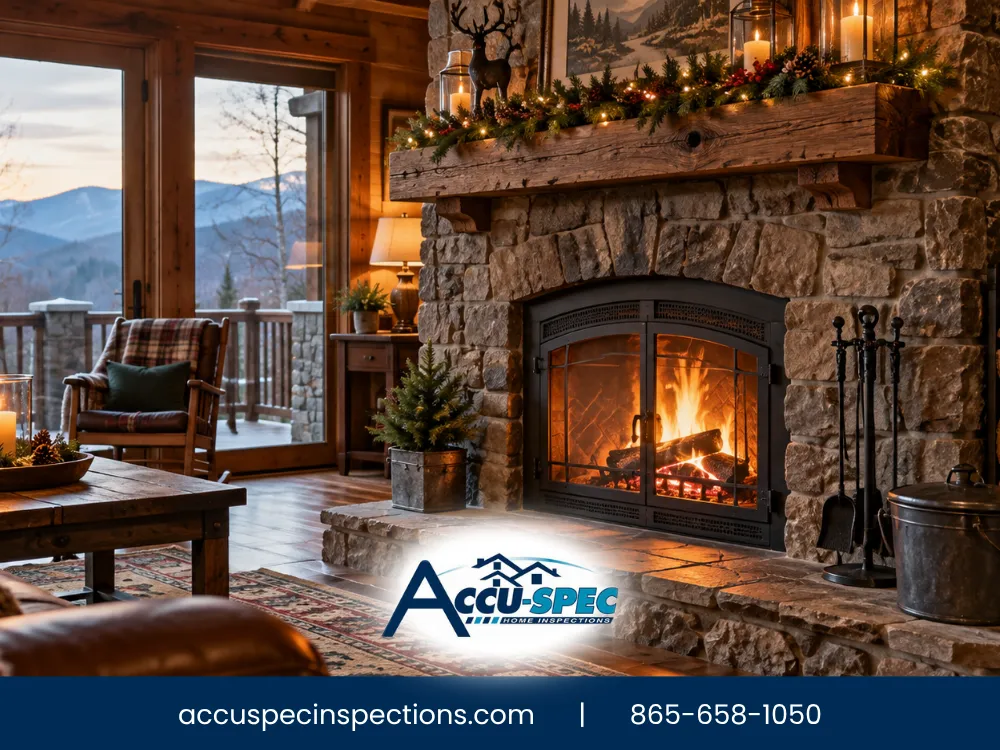
Between Thanksgiving and New Year's, many Smoky Mountain cabins see their heaviest fireplace use of the year. Families come up for the holidays, the evenings are cold, and a fire is part of what people booked. For some guests, it may be their first time using a wood stove or gas fireplace, and they're doing it in a cabin they've never stayed in before.
That makes November an important time to review Gatlinburg cabin fireplace safety before holiday guests arrive. Cabin owners should check fireplaces, wood stoves, gas logs, chimneys, and nearby combustible materials before the heating season gets underway.
This guide explains what owners can check themselves, what a professional home inspection evaluates, when to call a chimney specialist, and which precautions matter most for Gatlinburg vacation rentals.
Why Does Fireplace Safety Matter in Gatlinburg Cabins?
Fireplace safety matters especially in Gatlinburg cabins because many properties feature wood interiors, surrounding trees, and heating equipment guests may not know how to operate.
Several conditions deserve particular attention:
Wood construction and interiors. Log walls, tongue-and-groove ceilings, and timber mantels can place combustible materials near heat sources. Clearances that were appropriate when the fireplace was installed may change after renovations, new furnishings, or holiday decorating.
Heavy tree cover and leaf litter. Chimneys often extend through roofs surrounded by mature trees. Leaves can collect in roof valleys and behind chimneys, while missing or unsuitable chimney caps may allow embers to escape.
Unfamiliar guests. Cabin owners may know how a particular damper, stove door, or gas log system operates. Holiday guests may not, so clear instructions and well-maintained equipment are especially important.
Long periods without use. Fireplaces that sit unused through spring and summer may accumulate debris or develop operating issues that aren't apparent until the heating season.
For vacation rental owners in Gatlinburg, Pigeon Forge, and Sevierville, preparing fireplace equipment before peak holiday bookings is a practical part of seasonal property maintenance.
What Does a Home Inspection Check on a Fireplace or Wood Stove?
A professional home inspection generally evaluates the readily accessible, visible components of a fireplace, wood stove, and chimney. The goal is to document observable conditions and identify items that a qualified specialist may need to evaluate further.
During a cabin home inspection, the inspector may review:
Firebox and hearth. Visible cracks, gaps, deteriorated firebrick, and the condition and dimensions of the hearth extension.
Damper and lintel. The condition of the lintel and, when applicable, the operation of a readily accessible, manually operated damper.
Combustible material clearances. Visible spacing between fireplaces, stoves, stovepipes, mantels, wood trim, and surrounding log walls.
Chimney exterior. Visible masonry, chimney caps, crowns, spark arrestors, and flashing, observed from accessible and safe vantage points.
Evidence of previous conditions. Smoke staining, water staining near chimney chases, or signs of excessive heat exposure.
Smoke and carbon monoxide alarms. Visible alarm locations and accessible testing, when included in the inspection scope.
Does a Home Inspection Include the Inside of a Chimney?
A standard home inspection does not provide a complete evaluation of the chimney flue interior.
The inspector may observe accessible portions of the fireplace and chimney, but examining the full flue liner, concealed interior surfaces, and creosote accumulation requires a qualified chimney professional using appropriate inspection equipment.
The InterNACHI Standards of Practice describe the general scope and limitations of a residential home inspection.
Understanding this distinction matters when buying a cabin or preparing a vacation rental for seasonal occupancy. A home inspection and a specialized chimney inspection serve different purposes.
When Should Gatlinburg Cabin Owners Hire a Chimney Professional?
Cabin owners should arrange a professional chimney inspection at least annually and have the system cleaned when its condition requires it.
The National Fire Protection Association's NFPA 211 standard addresses inspection and maintenance of chimneys, fireplaces, vents, and solid fuel-burning appliances.
The Chimney Safety Institute of America also describes different levels of chimney inspection based on the condition of the system and the reason for the evaluation.
A chimney professional can examine areas that a general home inspector does not fully assess, including the flue interior, liner, and creosote deposits.
For Gatlinburg cabin owners, a practical approach includes scheduling a chimney inspection before the heating season, completing any recommended cleaning or service, and keeping the documentation.
For buyers, a professional home inspection in Gatlinburg can provide a broader assessment of the property's visible systems and components. A chimney specialist can then evaluate the fireplace and venting system in more detail.
What Is a Level 2 Chimney Inspection?
A Level 2 chimney inspection is a more detailed examination that may include video scanning of the flue interior and evaluation of accessible areas beyond a routine Level 1 inspection.
Under NFPA 211, a Level 2 inspection is generally called for when a property is sold or transferred, following certain changes to the system, or after events that may have affected chimney integrity.
If you're buying a Gatlinburg cabin with a fireplace or wood stove, ask about previous chimney service records and discuss the appropriate inspection level with a qualified chimney professional before closing.
What Should Gatlinburg Cabin Owners Check Before Holiday Guests Arrive?
A seasonal fireplace safety checklist can help owners prepare their cabins for holiday occupancy. These visual checks supplement, rather than replace, professional chimney inspection and appliance servicing.
1. Check the Fireplace Damper
For fireplaces equipped with manually operated dampers, confirm that the damper moves as intended and is positioned according to the appliance's operating instructions.
Look for visible obstructions without reaching into the chimney or attempting to remove debris yourself.
If the damper is difficult to operate, appears damaged, or won't position correctly, have it evaluated before using the fireplace.
2. Review the Chimney Exterior
From the ground or another safe location, look for:
Missing, leaning, or visibly deteriorated chimney caps.
Loose or deteriorated exterior masonry.
Leaves or debris that has accumulated near the chimney.
Visible changes around the chimney flashing or roof penetration.
Do not climb onto steep cabin roofs to investigate these conditions. Have a qualified professional inspect areas you cannot safely view.
3. Confirm Clearances Around the Fireplace or Stove
Keep combustible materials away from fireplaces, wood stoves, stovepipes, and other heat-producing surfaces.
Pay attention to furniture, rugs, firewood storage, mantels, decorative shelves, and seasonal decorations.
Required clearances depend on the equipment and installation. Follow the manufacturer's instructions and have uncertain installations reviewed by a qualified professional.
4. Examine Wood Stove Doors and Gaskets
A wood stove door should latch securely, and its gasket should be in serviceable condition.
Worn or missing gaskets can affect airflow and combustion. If the door does not close correctly or the gasket appears deteriorated, arrange appropriate servicing before use.
5. Test Smoke and Carbon Monoxide Alarms
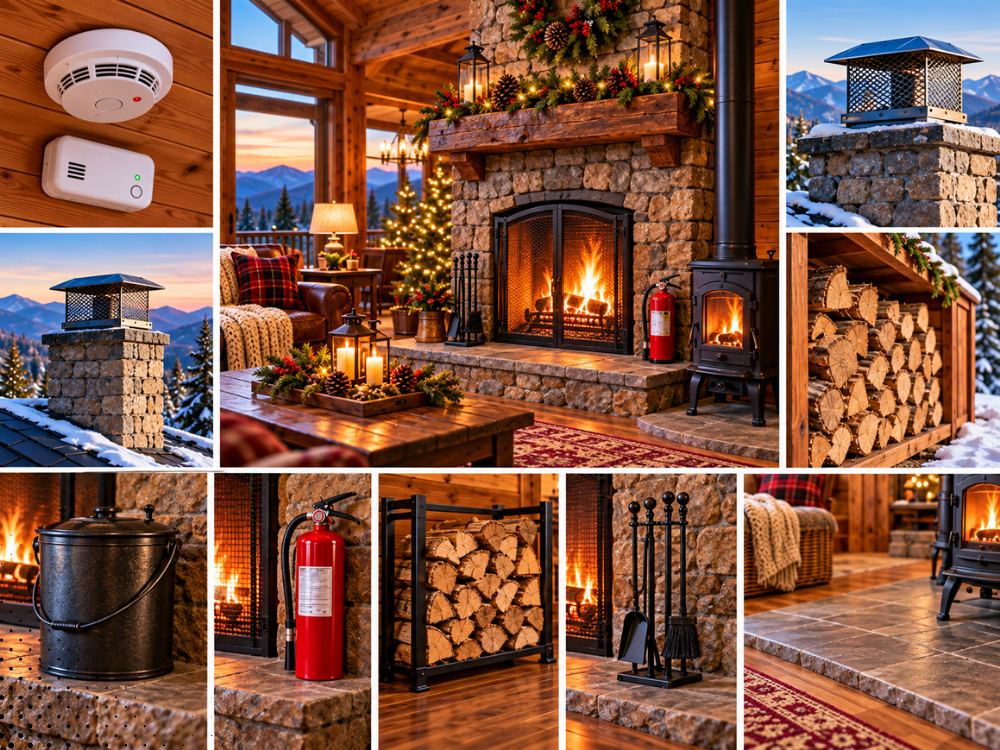
Working smoke and carbon monoxide alarms are essential in cabins with fuel-burning appliances.
Before holiday guests arrive, check alarm placement, test alarms per the manufacturer's instructions, replace batteries as needed, and replace units that have reached the end of their service life.
The U.S. Fire Administration provides guidance on smoke alarm placement, testing, and replacement.
6. Provide Proper Ash Storage
For wood-burning fireplaces and stoves, provide a metal ash container with a tight-fitting lid.
Store ashes outdoors, away from the cabin, decks, firewood, and other combustible materials. Ashes can retain heat long after a fire appears extinguished.
Guests should have clear instructions for handling ashes, or the rental's operating procedures should reserve ash removal for trained property personnel.
7. Make Fire Extinguishers Accessible
Ensure that appropriate fire extinguishers are available, accessible, and maintained according to their instructions.
Guests should know where extinguishers are located and how to contact emergency services. Fire extinguishers should not replace a safe evacuation when a fire cannot be controlled immediately.
Are Gas Logs Safer Than Wood-Burning Fireplaces?
Gas logs and wood-burning fireplaces operate differently, but both require appropriate installation, maintenance, and safe operation.
Many Smoky Mountain vacation rentals use gas logs because they are convenient for guests. However, gas log systems have specific ventilation and servicing requirements.
Vented Gas Logs
Vented gas logs are designed to operate with combustion gases exiting through an appropriate chimney or venting system.
The damper must remain in the position required by the manufacturer's instructions, generally open during operation. Some installations use a damper clamp or stop to prevent complete closure.
Vent-Free Gas Logs
Vent-free gas log systems are designed to operate without a conventional chimney connection. They rely on manufacturer-specified safety controls, including an oxygen depletion sensor.
These appliances still require proper installation, adequate ventilation, regular maintenance, and compliance with applicable requirements.
A qualified gas appliance technician should evaluate and service gas log equipment. Owners should not assume a gas fireplace is maintenance-free simply because it doesn't burn wood.
For rental properties, provide equipment-specific operating instructions, maintain appropriate carbon monoxide alarms, and keep service records available.
Fireplace Safety Tips for Gatlinburg Short-Term Rental Owners
Vacation rental fireplaces require additional planning because guests may be unfamiliar with the equipment and the property's layout.
Before Thanksgiving and Christmas bookings, consider these rental-specific precautions.
Provide Clear Fireplace Instructions
Post simple, readable instructions near the fireplace or stove.
Explain how the equipment operates, how to use the damper where applicable, which materials may be burned, and what guests should do after using the fireplace.
Instructions should match the actual appliance and the manufacturer's guidance.
Supply Appropriate Firewood
For wood-burning equipment, provide dry, seasoned firewood suitable for the appliance.
Wet or green wood can increase smoke and creosote accumulation. Providing appropriate firewood also discourages guests from collecting unsuitable materials.
Prohibit Burning Trash and Accelerants
Make it clear that guests should not burn trash, wrapping paper, cardboard packaging, or use gasoline or other accelerants to start fires.
These materials can produce unpredictable burning conditions and are not appropriate substitutes for recommended fire-starting materials.
Keep Chimney and Appliance Service Records
Maintain records of chimney inspections, cleaning, repairs, and gas appliance servicing.
These documents help property owners track maintenance and provide useful information for property management, insurance inquiries, and future real estate transactions.
Maintain Hearth and Floor Protection
Check the condition of the hearth, fireplace screen, and nearby floor surfaces.
Guests may place firewood or kindling too close to the equipment or leave a fireplace screen open. Clear instructions and appropriate noncombustible protection help support safer operation.
For owners managing a short-term rental property in Gatlinburg, fireplace preparation should be part of a broader seasonal property maintenance plan.
Frequently Asked Questions About Gatlinburg Cabin Fireplaces
How often should a Gatlinburg cabin chimney be swept?
Inspect chimneys and fireplaces at least annually, and clean as needed based on their condition and use. A heavily used vacation rental fireplace may require more frequent attention than one used occasionally. A qualified chimney professional can evaluate creosote accumulation and recommend an appropriate cleaning schedule.
Does a home inspection include the inside of the chimney?
A standard home inspection evaluates readily accessible and visible fireplace and chimney components but does not include a complete examination of the flue interior. A qualified chimney professional can use specialized equipment to assess the liner, internal surfaces, and other concealed conditions.
Should I arrange a chimney inspection before buying a Gatlinburg cabin?
Yes. If the cabin has a fireplace or wood stove, request available chimney maintenance records and arrange an appropriate evaluation with a chimney professional. A Level 2 chimney inspection is generally called for during a property sale or transfer. A general home inspection remains valuable for assessing the broader property's visible condition.
Do vented gas logs need the fireplace damper open?
Vented gas logs require an appropriate venting path for combustion gases. The damper generally must remain open during operation, but the manufacturer's installation instructions determine the exact configuration. Have a qualified gas technician confirm that the appliance and venting system are properly configured.
What is the most important fireplace safety preparation for holiday guests?
Working smoke and carbon monoxide alarms, professionally maintained heating equipment, and clear guest instructions are all important. Cabin owners should also confirm that combustible materials are kept at appropriate distances and that guests know how to operate the equipment safely.
Prepare Your Gatlinburg Cabin for Holiday Guests
Holiday visitors come to the Smoky Mountains for mountain views, family time, and comfortable evenings around the fireplace. Preparing that fireplace before guests arrive is an important part of responsible cabin ownership.
Schedule professional chimney and appliance servicing as appropriate, review the property's smoke and carbon monoxide alarms, and provide clear instructions for anyone using the equipment.
A general home inspection can also help owners and buyers better understand the visible condition of other property systems and components.
Accu-Spec Inspection Services provides home inspection services for properties in Gatlinburg and the surrounding Smoky Mountain area.
To discuss a cabin or buyer home inspection, call 865-658-1050 or schedule an inspection online.